Where the Steppe Meets the Suburb: Eastern European Design Principles Transforming American Residential Architecture
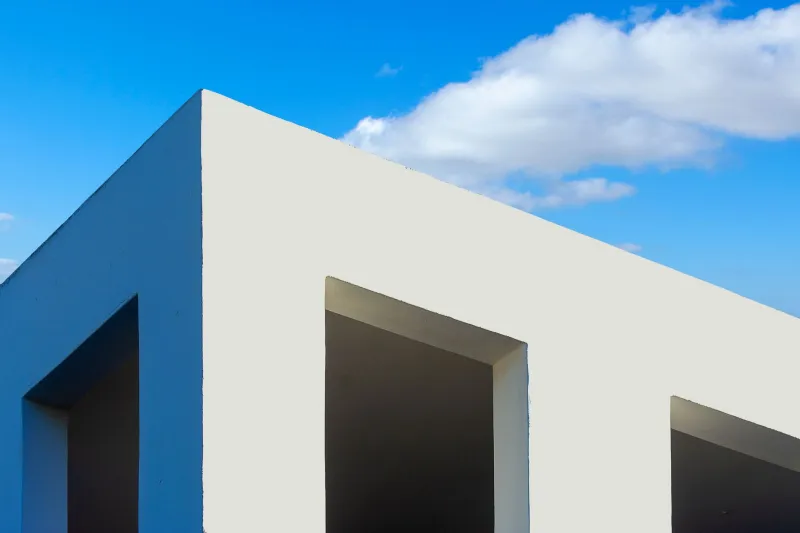
There is a particular quality of light that architects from the Azov region understand instinctively — the way it falls across a flat, open landscape and demands that built structures respond with clarity and intention. That sensitivity to environment, to material, and to the relationship between interior life and the world beyond the wall, is not merely a regional stylistic preference. It is a design philosophy. And increasingly, it is one that American homeowners and forward-thinking architects are drawing upon to shape a new generation of contemporary residences.
At Azovskiy & Pahomova Architects, our work sits at the intersection of this Eastern European heritage and the evolving demands of American domestic life. What we have observed — both through our own practice and through the broader architectural conversation — is that the principles embedded in this tradition speak to something universal: the human desire for spaces that are honest, purposeful, and enduring.
The Geometry of Intention
One of the most immediately recognizable characteristics of Eastern European architectural tradition, particularly as it developed through the twentieth century in regions bordering the Black Sea, is its commitment to bold, unambiguous form. Buildings were not adorned to communicate significance — they were shaped to embody it. Clean rectilinear volumes, strong horizontal lines, and carefully considered proportions were the vocabulary of an architecture that had little patience for the decorative and every respect for the structural.
In contemporary American residential design, this geometric clarity is finding renewed relevance. Homeowners, particularly in markets like the Pacific Northwest, the Mountain West, and the urban corridors of the Northeast, are increasingly drawn to homes that resist visual clutter. The proliferation of open-plan living, flat or low-slope rooflines, and facades defined by shadow and recession rather than applied ornament reflects a sensibility that Eastern European modernism understood long before it became a trend on design platforms.
What distinguishes the Azov-influenced approach, however, is that geometric rigor is never cold. The forms are bold, but they are scaled to human experience. A cantilevered overhang is not merely a formal gesture — it creates shelter, frames a view, and defines the threshold between inside and out. Every angular decision carries a functional rationale. This is architecture that earns its forms.
Material Honesty and the Tactile Interior
Perhaps no principle travels as well across cultural contexts as material honesty — the practice of allowing building materials to be seen, felt, and understood for what they actually are. In Eastern European design traditions shaped by both necessity and aesthetic conviction, materials were rarely concealed. Exposed concrete bore its board-formed texture. Brick remained visible at the hearth. Timber was left to age with dignity.
This approach is experiencing a significant resurgence in American interiors, where homeowners are moving away from the heavily finished, surface-treated aesthetic of the early 2000s toward something more tactile and authentic. Raw plaster walls, honed stone countertops, structural timber beams left in their natural state, and concrete floors sealed but not disguised — these are the material choices that define a contemporary American home influenced by this Eastern European sensibility.
At Azovskiy & Pahomova Architects, we frequently guide clients toward material palettes that prioritize longevity and character over novelty. A brushed limestone floor will not look dated in fifteen years. An exposed brick interior wall carries the kind of warmth that no paint finish can replicate. These are not simply aesthetic decisions — they are investments in the long-term integrity of a home's atmosphere.
Spatial Planning: The Logic of Flow
Eastern European residential design has long grappled with a challenge that American architects are now confronting with fresh urgency: how to create homes that feel spacious and generous without relying on sheer square footage. In regions where urban density was a given and resources were finite, architects developed sophisticated strategies for making space feel abundant through proportion, sequence, and the careful orchestration of compression and release.
The compressed entryway that opens dramatically into a double-height living space. The narrow corridor that turns to reveal an expansive kitchen flooded with southern light. The bedroom tucked beneath a sloped ceiling that creates intimacy rather than constraint. These are spatial narratives — sequences designed to be experienced over time, not consumed at a glance.
American homeowners are increasingly receptive to this approach, particularly as the cultural conversation around housing shifts away from maximalism and toward quality of experience. The square-footage arms race that defined suburban development for decades is giving way to a more nuanced appreciation for how space is organized and how it feels to move through a home day after day.
In our practice, we apply these spatial planning principles to projects ranging from urban infill residences in cities like Denver and Philadelphia to rural retreats in the Hudson Valley and the Carolinas. The specific program changes, but the underlying logic — that space should be purposeful, sequential, and emotionally resonant — remains constant.
The Cultural Depth Beneath the Surface
What distinguishes Eastern European design influence from other imported aesthetics is that it carries genuine cultural weight. This is not a trend assembled from mood boards and social media feeds. It is a tradition shaped by history, by climate, by the particular pressures and possibilities of a place and a people.
The Azov region, situated at the crossroads of ancient trade routes and successive waves of cultural exchange, produced an architecture that was inherently syncretic — absorbing influences from Byzantine, Ottoman, Russian, and Central European traditions while developing a distinct regional voice. That capacity for synthesis, for finding coherence among diverse influences, is perhaps the most valuable thing this tradition offers to contemporary American design.
American homes have always been sites of cultural negotiation, reflecting the diverse origins of their inhabitants and the evolving character of the communities they anchor. A design philosophy rooted in synthesis and adaptability is, in this sense, a natural fit for the American residential context.
Designing for Permanence in a Disposable Age
At its core, what Eastern European design principles offer the contemporary American home is a counterweight to disposability. In a market saturated with fast furniture, trend-driven finishes, and homes designed to photograph well rather than live well, the values embedded in this tradition — geometric clarity, material honesty, spatial intelligence, and cultural depth — point toward something more durable.
At Azovskiy & Pahomova Architects, this is the foundation of our practice. We design spaces that are not assembled from the catalog of the moment but built from a considered understanding of form, function, and the long arc of how people inhabit their homes. The Eastern European design heritage we draw upon is not a style to be applied — it is a way of thinking about architecture that has proven its worth across generations and geographies.
For American homeowners ready to invest in spaces that will endure — aesthetically, structurally, and emotionally — these principles offer a compelling and increasingly relevant framework. The steppe and the suburb may seem worlds apart. But the desire for a home that is honest, beautiful, and built to last is a language that requires no translation.