Beyond the Surface: How Material Choices Define the Soul of Contemporary Architecture
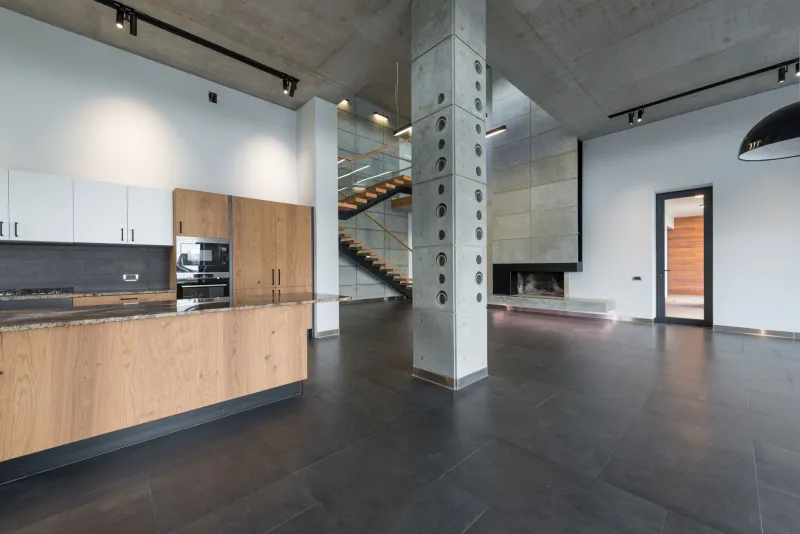
There is a moment in every architectural project when the design moves from abstraction to substance. Drawings become walls. Concepts become floors. Vision becomes the grain of timber or the cool weight of stone underfoot. This is the moment of materiality—and increasingly, it is the moment that separates architecture that endures from architecture that merely exists.
At Azovskiy & Pahomova Architects, we have long understood that material selection is not a finishing decision. It is a foundational one. The question of what a building is made of shapes everything: how it ages, how it performs, how it resonates emotionally with the people who inhabit it, and what it ultimately says about the culture that produced it.
Materials as Narrative
Contemporary architecture has moved decisively away from the idea that a material's job is simply to look good on opening day. Today's most thoughtful designers treat materials as storytelling instruments—each surface carrying a history, an intention, and a trajectory into the future.
Consider the growing prevalence of reclaimed materials in high-end residential projects across the United States. In cities like Detroit, Chicago, and Pittsburgh—places shaped by industrial heritage—architects are incorporating salvaged factory beams, repurposed brick from demolished mill buildings, and weathered steel panels into new residential construction. These are not nostalgic gestures. They are deliberate acts of cultural continuity, connecting a new structure to the landscape of human effort that preceded it.
A reclaimed oak beam carries decades of compression memory. A salvaged brick holds the thermal signature of the kiln that fired it. When these elements are integrated thoughtfully into contemporary spaces, they introduce a kind of temporal depth that no new material can replicate. The result is architecture that feels earned rather than assembled.
The Sustainability Imperative
Beyond narrative, the material conversation in 2024 is inextricably linked to environmental responsibility. American clients—particularly those commissioning residential and boutique commercial projects—are arriving at design consultations with informed questions about embodied carbon, sourcing transparency, and lifecycle performance. This is a shift that has fundamentally altered how architects approach the selection process.
Mass timber construction, once considered a niche European practice, has gained significant traction across the American market. Cross-laminated timber (CLT) panels now appear in everything from Pacific Northwest family homes to mid-rise office buildings in Austin and Denver. The appeal is multi-dimensional: structural integrity, natural thermal regulation, carbon sequestration during the material's lifespan, and an undeniable warmth that synthetic alternatives struggle to achieve.
At the same time, innovative composites are entering the palette in compelling ways. Recycled glass aggregate concrete, mycelium-based insulation panels, and fiber-reinforced polymers derived from agricultural waste are no longer experimental curiosities—they are production-ready materials that forward-thinking firms are incorporating into real projects. The challenge, and the craft, lies in deploying them with the same rigor and intentionality applied to traditional materials.
Durability as a Design Value
One of the most persistent tensions in contemporary design is the pressure to deliver spaces that feel current without becoming dated. Materials play a central role in navigating this tension. The wrong choice can make a space feel time-stamped; the right one allows it to evolve gracefully.
Corten steel offers an instructive example. Initially associated with industrial landscapes and public sculpture, weathering steel has found a compelling role in residential exteriors across the American Southwest and Midwest. Its controlled oxidation process produces a surface that changes over time—deepening in color, developing texture, becoming more itself as years pass. Rather than resisting the effects of climate and time, it collaborates with them. This is durability reimagined not as resistance, but as adaptation.
Similarly, natural stone—limestone, bluestone, and quartzite among them—continues to assert its relevance in contemporary interiors precisely because its visual character cannot be perfectly manufactured. Slight variations in veining, color, and texture mean that no two installations are identical. In an era of mass production and digital fabrication, this irreproducibility carries genuine value.
The Unexpected Material
Some of the most memorable spaces being designed today derive their power from a single unexpected material choice—one that reframes everything around it. A raw concrete ceiling in an otherwise warm residential kitchen. A hand-hammered copper backsplash in a commercial hospitality space. Blackened steel shelving in a library lined with pale ash millwork.
These contrasts are not accidental. They reflect a designer's understanding that materials speak in relation to one another. Tension between elements—rough and refined, industrial and organic, ancient and contemporary—creates the kind of visual and tactile complexity that makes a space worth spending time in. It is the material equivalent of a well-constructed sentence: the meaning emerges not from any single word, but from the relationship between them.
For commercial projects in particular, unexpected material choices have become a powerful tool for brand differentiation. A retail environment or hospitality space that deploys materials with genuine intelligence communicates something about the values of the business occupying it. It signals that care was taken—that the people responsible for the space were thinking beyond trends.
Sourcing with Intention
The question of where materials come from has become as important as what they are. Sourcing transparency—knowing the origin, the extraction process, and the labor conditions associated with a material—is increasingly a part of responsible practice. American architects working with domestic stone quarries, regional timber suppliers, and local fabricators are not simply making an environmental choice. They are making a cultural one, investing in regional craft traditions and supply chains that strengthen the communities where their projects are built.
This localism also produces design benefits. Materials sourced from the region where a building stands tend to respond well to local climate conditions. They carry a visual kinship with the surrounding landscape. A home built with Colorado sandstone or Georgia marble has a rootedness that imported materials rarely achieve.
The Long Conversation
Ultimately, the most important thing we can say about material selection is that it is a commitment. A material chosen for a building will outlast trends, renovations, and the preferences of successive occupants. It will be touched, worn, cleaned, and observed across decades. It will age in ways that are either graceful or graceless, depending on how well it was understood at the moment of selection.
At Azovskiy & Pahomova Architects, we approach this commitment with the seriousness it deserves. Every material we specify is considered not only for its performance on day one, but for the story it will tell twenty years into a building's life. Because the spaces that truly inspire—the ones that people return to, photograph, and remember—are almost always the ones where someone asked the hard questions about materiality early, and answered them with both intelligence and care.