Look Up: The Case for Treating Your Ceiling as the Room's Most Powerful Design Element
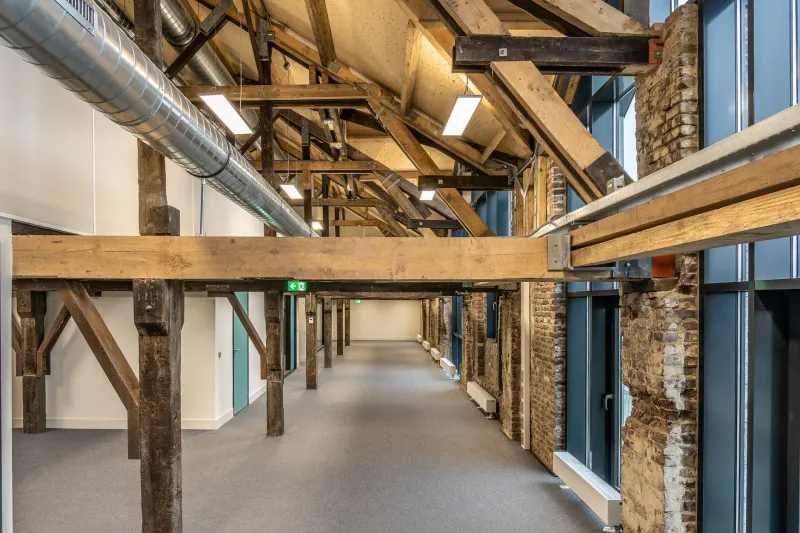
There is a quiet hierarchy in how most people approach interior design. Walls receive paint swatches, flooring samples arrive by the dozen, and furniture selections consume hours of deliberation. Yet the surface that commands the widest unobstructed view in any room — the ceiling — is routinely dismissed with a coat of flat white paint and very little else.
This is a significant missed opportunity. At Azovskiy & Pahomova Architects, we have long held that the ceiling is not merely a structural cap on a room but its fifth and perhaps most expressive wall. When treated with genuine design intention, it becomes the element that elevates a space from competent to compelling.
Why the Ceiling Shapes Perception More Than We Realize
Human spatial perception is surprisingly sensitive to what happens overhead. The height, texture, and visual weight of a ceiling directly influence how we feel within a room — whether a space reads as intimate or expansive, grounded or weightless, calm or dynamic. Neuroscientific research on environmental psychology has consistently shown that ceiling height alone affects cognitive processing: higher ceilings tend to encourage abstract and creative thinking, while lower ones promote focused, detail-oriented work.
But height is only one variable. The material, color, depth, and articulation of a ceiling shape a room's acoustic character, its relationship to natural light, and the emotional register it communicates to anyone who enters. A raw concrete soffit carries an entirely different message than a coffered mahogany ceiling — and both are worlds apart from a seamlessly illuminated stretch ceiling that seems to dissolve the boundary between structure and sky.
The ceiling, in other words, is not passive. It is one of the most active contributors to spatial experience.
Structural Honesty as Aesthetic Statement
One of the most enduring approaches in contemporary American residential architecture is the decision to expose structural elements rather than conceal them. Timber beams, steel joists, and concrete slab undersides — elements that previous generations hid behind drywall and drop ceilings — have become celebrated features in their own right.
This shift reflects a broader cultural appreciation for material authenticity. In a Chicago loft conversion or a Pacific Northwest custom home, exposed Douglas fir rafters do more than reference craft tradition; they give the room a rhythm and directionality that no flat surface can replicate. Light moves differently across a beamed ceiling. Sound behaves differently. The eye is invited upward and across rather than simply contained.
In commercial settings, exposed structural systems have become nearly synonymous with creative workplace design. The logic is straightforward: when a ceiling reveals its own engineering, it communicates transparency, confidence, and a willingness to engage with how things are actually made — values that resonate strongly with the contemporary American professional culture that occupies these spaces.
Suspended Elements and the Architecture of Depth
Beyond structural exposure, some of the most innovative ceiling treatments in recent years have involved the introduction of suspended elements that create layered, three-dimensional overhead environments. These range from acoustic baffles and sculptural installations to living green panels and custom lighting armatures.
In hospitality and retail design, suspended ceiling elements serve dual purposes: they manage acoustics and airflow while simultaneously creating visual identity. A carefully designed array of perforated metal panels suspended at varying heights above a restaurant dining room does not merely look interesting — it shapes conversation zones, absorbs sound, and gives the space a sense of curated depth that photographs cannot fully capture.
Residential applications of this principle tend toward the more intimate. A bedroom ceiling fitted with a softly illuminated fabric canopy creates enclosure without enclosing. A dining room with a custom pendant cluster designed as a single coherent installation — rather than a collection of individual fixtures — transforms the act of gathering around a table into something closer to ceremony.
At Azovskiy & Pahomova Architects, we have found that the most successful suspended ceiling interventions are those designed in dialogue with the floor plan below. The ceiling does not float in isolation; it responds to furniture arrangements, traffic patterns, and the specific quality of light at different times of day.
Light as Ceiling Architecture
Perhaps no ceiling treatment is more transformative — or more frequently mishandled — than integrated lighting design. The default approach in much American residential construction involves recessed can lights distributed on a grid, a solution that is functional but rarely beautiful. It treats light as utility rather than architecture.
The alternative is to conceive of lighting as a ceiling design element from the earliest stages of a project. Cove lighting that grazes across a curved plaster surface creates a softness that cannot be achieved with direct illumination. A linear slot cut into a concrete ceiling, housing LED strip lighting, produces a precise architectural line that reads as both structural and luminous. Backlit onyx panels set into a ceiling plane — an approach we have employed in select residential commissions — transform the overhead surface into something that glows from within, giving the room an otherworldly warmth after dark.
The relationship between ceiling geometry and lighting placement is one of the most technically demanding aspects of high-end interior architecture. Getting it right requires close collaboration between the design team, the lighting consultant, and the contractor — but the results consistently justify the investment.
Color, Texture, and the Courage to Commit
For homeowners and designers who are not ready to undertake structural modifications or custom installations, the simplest intervention remains among the most powerful: committing to a ceiling treatment with genuine chromatic and textural intention.
Dark ceilings — deep navy, charcoal, forest green, even matte black — have moved firmly into the mainstream of American interior design, and for good reason. A deeply colored ceiling lowers the perceived height of a room in a way that creates intimacy rather than confinement. In a double-height living room where warmth is elusive, a dark ceiling brings the space into human scale without sacrificing the drama of the volume.
Textured plaster, Venetian techniques, and applied geometric patterns offer another register of ceiling expression. These are not new ideas — the coffered ceilings of Beaux-Arts architecture and the ornate plasterwork of Victorian interiors were among the most celebrated features of their respective eras. Contemporary design has largely stripped these traditions back to their essential logic: that texture overhead creates depth, shadow, and visual richness that flat paint simply cannot deliver.
Designing for Memory
The measure of great architecture is not whether a space photographs well on the day of completion, but whether it remains in the memory of the people who inhabit it. The ceiling, more than almost any other surface, has the capacity to create that kind of lasting impression.
When a guest enters a room and pauses — not because something is obviously dramatic, but because the space feels inexplicably right — it is often the ceiling doing quiet, essential work. The proportions are balanced. The light is generous without being harsh. The material overhead resonates with the materials below. The room has a completeness that registers emotionally before it registers intellectually.
This is the aspiration that guides our approach to ceiling design at Azovskiy & Pahomova Architects: not spectacle for its own sake, but the patient construction of spaces that feel fully considered from every angle. Including, and perhaps especially, the one most people never think to examine until someone finally asks them to look up.